AI Levelpath · 2026
Designing at the speed of AI
I set up Levelpath's AI design practice and co-built a prototyping tool that took features from engineering-ready to production in days, not weeks.
Problem
Getting a feature from engineering-ready to production took about two weeks, slowed by back-and-forth, stale specs, and prototypes that didn't match production code.
What I did
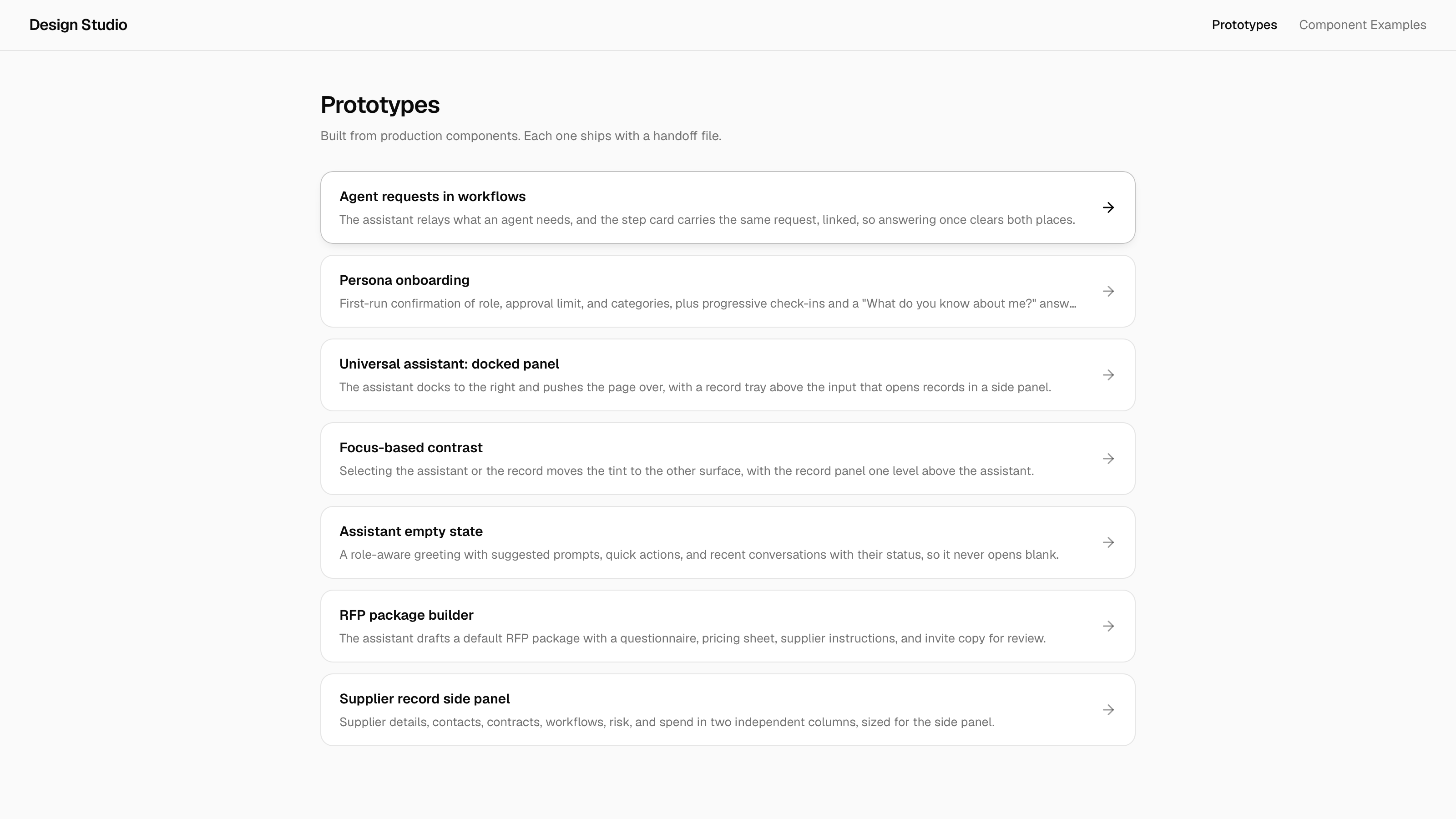
Helped build three generations of AI prototyping, ending with Design Studio, co-built with engineering on our production design system.
Outcome
Turnaround dropped from about 2 weeks to about 3 days, and the team cut 30 Figma licenses.
- ~3 days From engineering-ready to production, down from ~2 weeks
- 30 Figma licenses removed
- $12K Estimated yearly savings
The problem
Levelpath was a small team building a new AI-native platform. Getting a feature from engineering-ready to production took about two weeks.
Most of that time went to three things. Engineers and designers went back and forth on details the specs didn’t answer. Specs fell behind the product. And prototypes didn’t match production code, so what engineers saw in a prototype wasn’t what they could actually build.
Three tools to get there
When I joined, I helped develop Robbie 5, an early AI-driven prototyping tool and our first attempt at this. Its code didn’t match what engineers used in practice, and there were no real specs. Engineers’ agents got confused and often hallucinated what was new and what had changed. They had a hard time finding the delta.
Next we tried Claude Design. It was valuable for early discovery and exploration, and it was a tool we wouldn’t have to maintain. But it produced HTML renderings of screens, which didn’t help with the handoff to engineering.
So we built Design Studio, working side by side with engineering. It’s the one that stuck, and it became the default for all of the team’s designs and prototypes.
Key decisions
Prototype with production components
Design Studio builds prototypes from the components we use in production, and tracks changes to those components. What a designer shows is what an engineer can ship, so a prototype is never a guess about the real product.
Hand off a file, not a frame
Every prototype ships with a Markdown handoff file that engineers and their agents can read directly:
- Title, problem statement, and summary
- Links to the prototype: the GitHub PR and a public Firebase link
- Acceptance criteria from the PRD
- A brief overview of what the PR contains
- A table of changes: what the experience is today, what’s net new, what stays the same, and what changes
- A delta table
- What isn’t changing, and what’s stubbed for the prototype, like dead links
- Open questions
The delta was the part Robbie 5 couldn’t find. Writing it down for every handoff means no one has to guess.
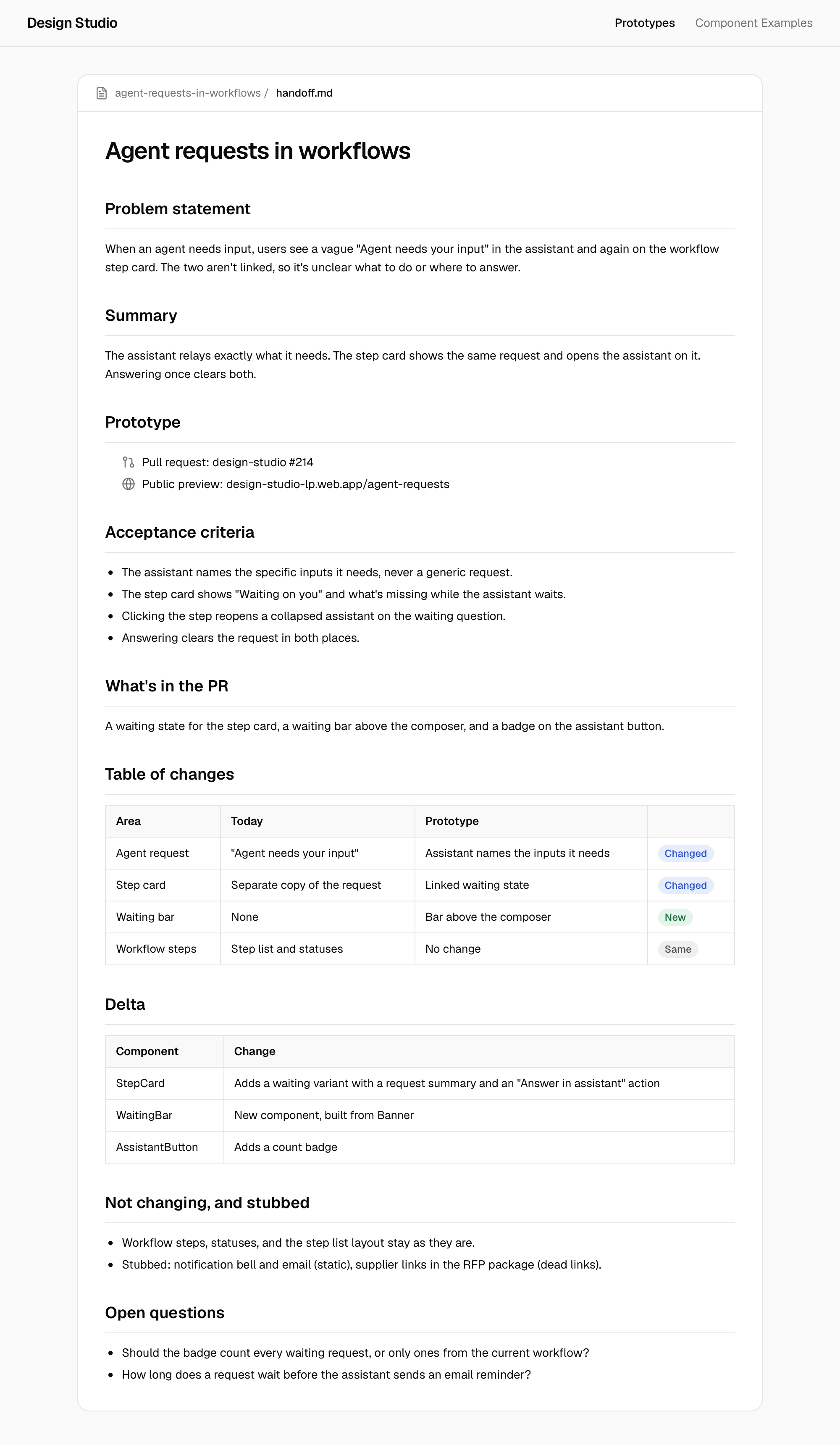
The handoff file for the agent requests prototype. The table of changes and the delta tell engineers' agents exactly what's new.
Tickets that agents can use
We also built a skill that writes Jira tickets for the work. Engineers take the ticket and the handoff and pass them to their Cursor agents, which get results that match what the team can actually deliver.
- DesignDesign Studio prototypeBuilt from production components
- HandoffMarkdown handoffChanges, deltas, and open questionsJira ticketWritten by a skill
- BuildEngineer's Cursor agentWorks from the ticket and handoff
- ShipProductionAbout 3 days, down from about 2 weeks
From prototype to production. The handoff and ticket give engineers' agents the same picture the designer had.
Results
- Turnaround from engineering-ready to production went from about 2 weeks to about 3 days.
- Design Studio became the default for all designs and prototypes.
- The team needed less Figma, removing 30 licenses (about $12K a year).
Reflection
Designers ship closer to code. A prototype built from production components is close to the real thing, so the designer’s work becomes the spec instead of a picture of it. That moves designers into decisions that used to happen after handoff.
The bottleneck moved. Once building took days instead of weeks, the hard part was no longer making the thing. It was deciding what to build and checking that it was right.